
Natural Logarithms
Natural logarithms are logarithms that use the irrational number "e" (approximately 2.7183) as their base. In other words, the natural logarithm of a positive real number a (\(a > 0\)) is the exponent to which e must be raised to obtain a, and it is denoted as ln(a):
ln(a) = b if and only if eb = a
The natural logarithm can also be written as loge(a) to make the base explicit. Historically, the term "Napierian logarithm" has sometimes been used to refer to natural logarithms, although the original definition differs slightly.
Table of Contents
Examples
Below are several examples of base-e logarithms:
- The natural logarithm of 1 is 0 because e0 = 1, so ln(1) = 0.
- The natural logarithm of e is 1 because e1 = e, so ln(e) = 1.
- ln(1/e) = -1 because e-1 = 1/e.
- ln(e5) = 5.
- ln √e = 1/2 because e1/2=√e.
- The natural logarithm of zero or negative numbers is undefined in the real numbers.
When the argument is not a rational power of e, the natural logarithm evaluates to an irrational number—a non-terminating, non-repeating decimal:
- The natural logarithm of 2 is ln(2) = 0.6931...
- The natural logarithm of 3 is ln(3) = 1.0986...
- The natural logarithm of 5 is ln(5) = 1.6094...
How to Calculate Natural Logarithms
Scientific calculators include a dedicated button for computing natural logarithms. Simply press the "ln" key and enter the number whose logarithm you want to find.
You can also convert a natural logarithm into a common logarithm (base 10) by dividing the common logarithm of the argument by the common logarithm of e:
$$\ln(a)=\dfrac{\log (a)}{\log (e)}$$
Applications
The natural logarithm has widespread applications across mathematics, the natural sciences, engineering, economics, and more. Key applications include:
- Exponential growth and decay: Natural logarithms are used to model exponential growth and decay phenomena in biology (population growth), physics (radioactive decay), and economics.
- Electrical circuit analysis: In electrical engineering, natural logarithms appear in circuit analysis to describe the relationship between current and voltage in nonlinear components such as diodes.
- Differential equations: In mathematics and physics, natural logarithms frequently arise in solutions to linear and nonlinear differential equations, particularly in growth and decay models.
- Finance and economics: In finance, natural logarithms are used to model asset price volatility and to calculate continuously compounded interest rates.
Properties
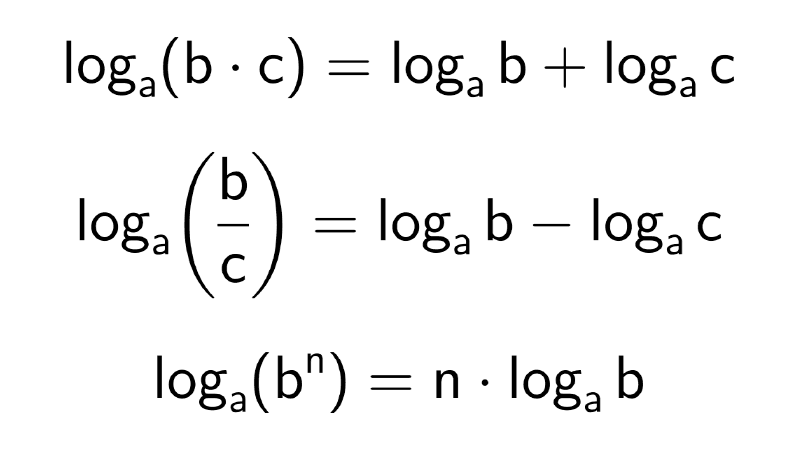
Base-e logarithms satisfy the same fundamental rules as all other logarithms. For positive real numbers \(a > 0\) and \(b > 0\):
- The natural logarithm of one is zero: \(\ln(1)=0.\)
- The natural logarithm of \(e\) is one: \(\ln(e)=1.\)
- Product Rule: The natural logarithm of a product equals the sum of the natural logarithms of its factors: \(\ln(ab)=\ln(a)+\ln(b).\)
- Quotient Rule: The natural logarithm of a quotient equals the difference between the natural logarithms of the numerator and denominator: \(\ln\left(\dfrac{a}{b}\right)=\ln(a)-\ln(b).\)
- Power Rule: The natural logarithm of a power equals the exponent times the natural logarithm of the base: \(\ln(a^n)=n\cdot\ln(a).\)
- The natural logarithm of a power of \(e\) equals the exponent: \(\ln(e^n)=n.\)
- Change of Base Formula: The natural logarithm of a number can be found by dividing its logarithm in another base \(c\) (\(c > 0,\ c \neq 1\)) by the logarithm of \(e\) in that same base: \(\ln(a)=\dfrac{\log_c(a)}{\log_c(e)}.\)
Natural Logarithm Function
In precalculus and calculus, treating the argument as an independent variable defines the natural logarithm function \(y=\ln(x),\) which is the inverse of the natural exponential function \(y=e^x.\)

Did you find this useful? Rate it!
0.0 / 5 — 0 votes

HOW TO CITE THIS ARTICLE
Machado, D. (2026, November 26). Natural Logarithms. Flamath. https://en.flamath.com/natural-logarithms
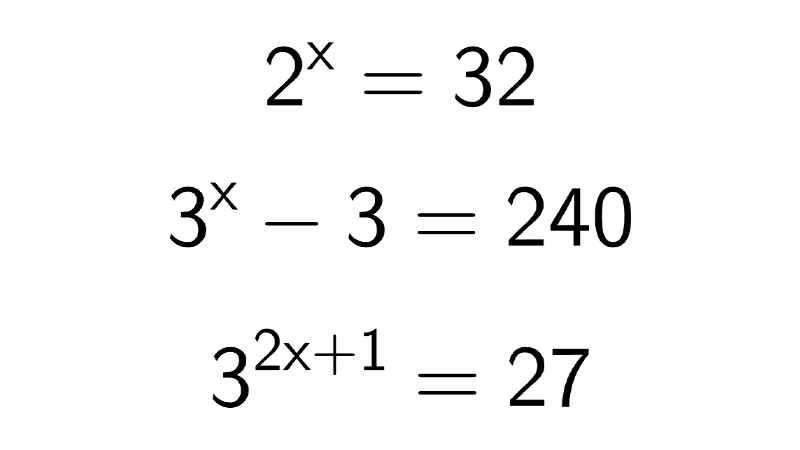
Exponential Equations
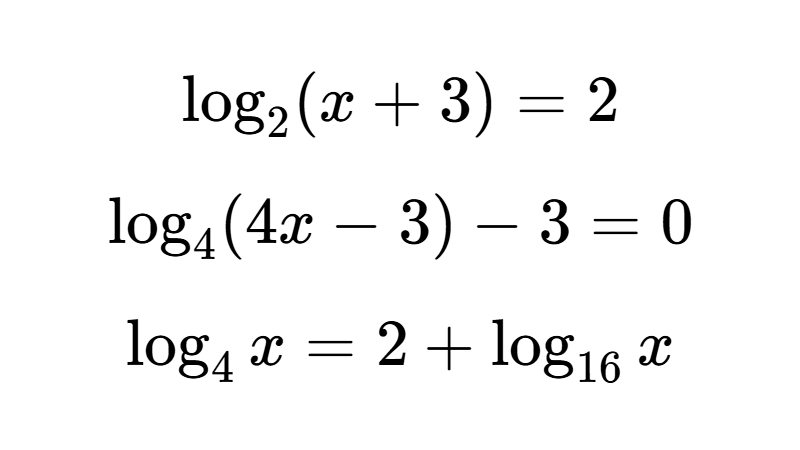
Logarithmic Equations
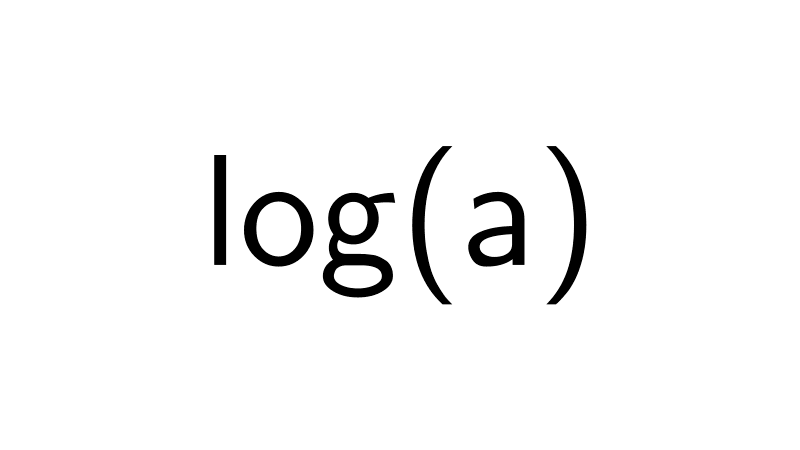
Common Logarithms
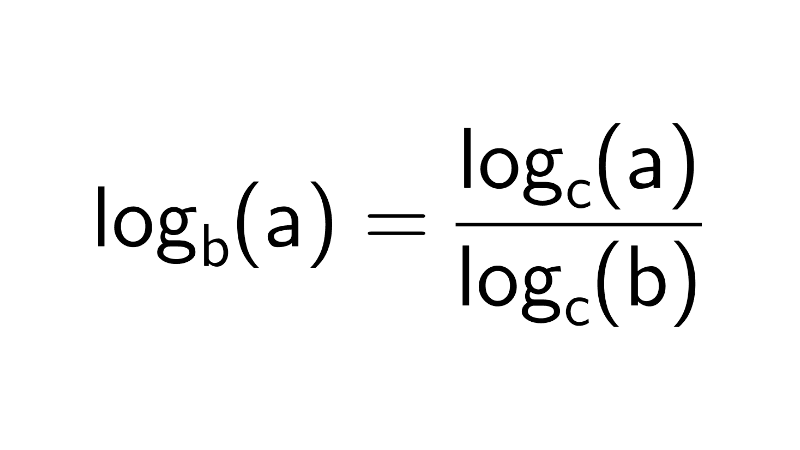
Change of Base Formula for Logarithms
Properties of Logarithms
Leave a Reply
Related Articles