

Negation of a Conditional Statement
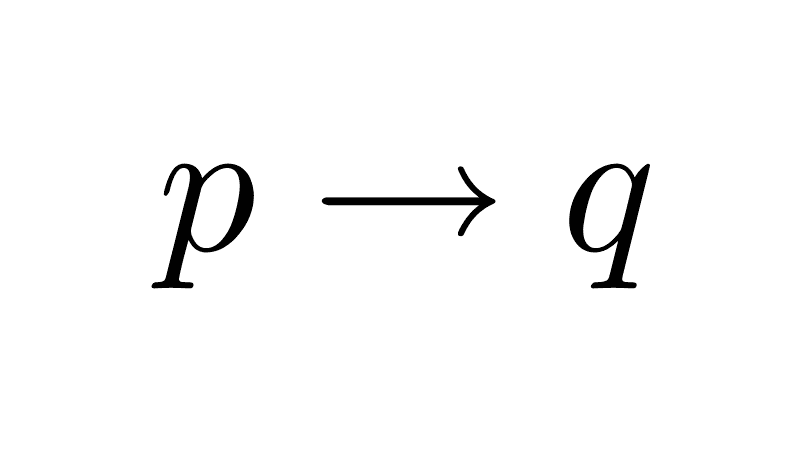
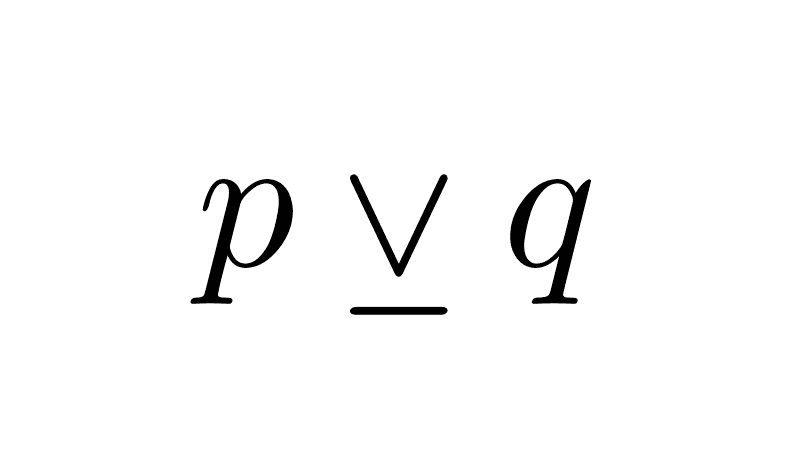
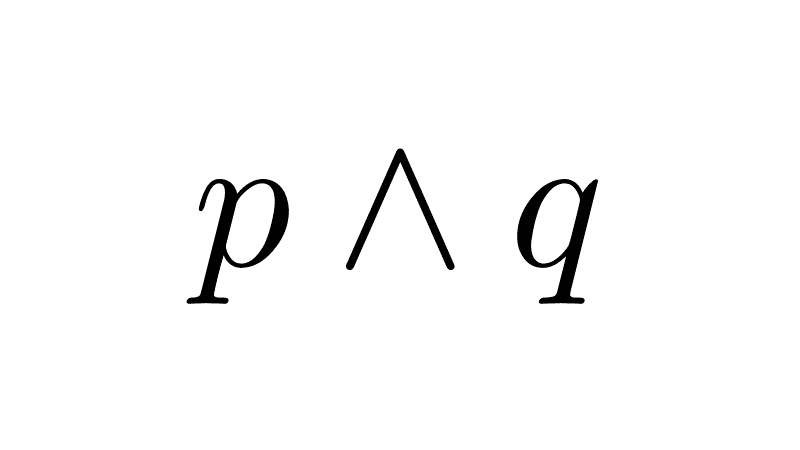
The negation of a conditional statement (p → q) is logically equivalent to a conjunction formed by the original hypothesis and the negation of the conclusion: ¬(p → q) ≡ p ∧ ¬q. In plain words, the procedure consists of keeping the hypothesis as it is, replacing the conditional operator with a conjunction ("and"), and negating the conclusion.
Understanding this equivalence does not require memorizing formulas, but rather analyzing when a conditional statement is false. Negating a proposition means stating that its condition fails to hold; in an implication of the form "if p, then q," the only scenario that invalidates it occurs when the initial condition is fully satisfied but the promised outcome does not occur. For this reason, asserting that a conditional statement is false is equivalent to verifying that the hypothesis holds and, at the same time, the conclusion does not hold.
A common mistake is assuming that negating a conditional statement yields another conditional statement, such as "if p, then not q" (p → ¬q) or "if not p, then not q" (¬p → ¬q). The negation of a commitment does not establish a new condition under future hypotheses; instead, it asserts a concrete fact in the present: the hypothesis was met, and the outcome failed.
Table of Contents
Examples
To see how the rule of keeping the hypothesis and negating the conclusion works in practice, let us examine the following statements in natural and formal language:
- The negation of "if it rains, then I use an umbrella" (p → q) is "it rains and I do not use an umbrella" (p ∧ ¬q).
- The negation of "if I study for the exam, then I pass" (p → q) is "I study for the exam and I do not pass" (p ∧ ¬q).
- The negation of "if a number ends in zero, then it is divisible by 5" (p → q) is "the number ends in zero and it is not divisible by 5" (p ∧ ¬q).
- The negation of "if a polygon is a square, then it has four sides" (p → q) is "the polygon is a square and it does not have four sides" (p ∧ ¬q).
- The negation of "if x = 3, then 2x + 1 = 7" (p → q) is "x = 3 and 2x + 1 ≠ 7" (p ∧ ¬q).
- The negation of "if x > 4, then x2 > 16" (p → q) is "x > 4 and x2 ≤ 16" (p ∧ ¬q).
Formal Proof
To verify that the equivalence ¬(p → q) ≡ p ∧ ¬q holds in all possible cases, we can use two standard methods in propositional logic: simplification using logical equivalence laws and constructing a truth table.
Proof Using Laws of Logical Equivalence
To develop the algebraic proof, we start from the standard definition of the conditional statement expressed in terms of disjunction and negation:
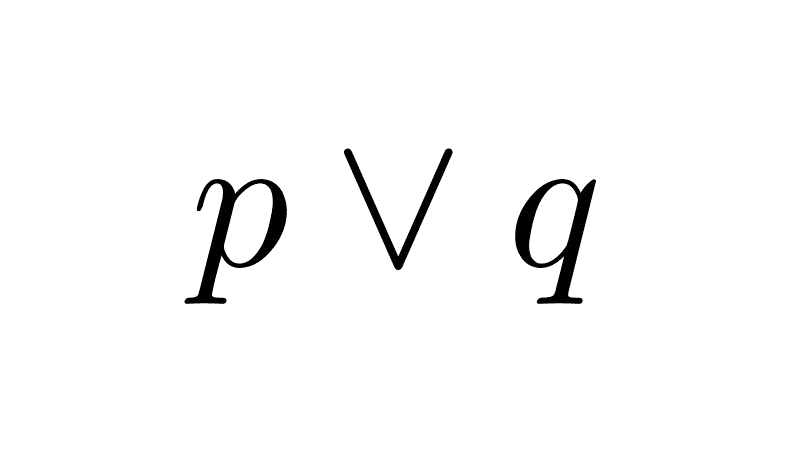
- Write the conditional equivalence: p → q ≡ ¬p ∨ q.
- Apply negation to both sides of the equivalence: ¬(p → q) ≡ ¬(¬p ∨ q).
- Apply De Morgan's laws to distribute the negation across the disjunction, turning it into a conjunction: ¬(¬p ∨ q) ≡ ¬(¬p) ∧ ¬q.
- Apply the double negation law to the first term (¬(¬p) ≡ p) to obtain the final expression: p ∧ ¬q.
Through this procedure, we algebraically prove that ¬(p → q) ≡ p ∧ ¬q without relying on semantic interpretations.
Proof Using a Truth Table
To verify the equivalence by comparing each combination of truth values, we construct the table for the simple propositions p and q, evaluating step by step the original conditional, its negation, and the resulting conjunction:
| p | q | ¬q | p → q | ¬(p → q) | p ∧ ¬q |
|---|---|---|---|---|---|
| T | T | F | T | F | F |
| T | F | T | F | T | T |
| F | T | F | T | F | F |
| F | F | T | T | F | F |
Comparing the fifth column (¬(p → q)) with the last column (p ∧ ¬q), we see that both yield the exact same truth values for each row (F, T, F, F). This match proves that both formulas are logically equivalent.
Did you find this useful? Rate it!
0.0 / 5 — 0 votes

HOW TO CITE THIS ARTICLE
Machado, D. (2026, October 13). Negation of a Conditional Statement. Flamath. https://en.flamath.com/negation-of-conditional-statement
Leave a Reply
Related Articles